Asia-Pacific · Window Manufacturer
Prime Asia Associates: Window Cleaning Guide
🇹🇭 Thailand · Last reviewed by Justin Orloff
For owners, installers and cleaners looking after Prime Asia Associates windows. The maker's own care advice first, then what I add as a window cleaner since 1999.
Quick Facts
- Founded
- Thailand
- Headquarters
- Thailand
- Materials
- Aluminium alloy and uPVC profiles
- Glazing
- Supplier and installer
- Market tier
- Mid-Range
Brand at a Glance
- Country
- Thailand
- Coverage
- Thailand and Southeast Asia
- Product types
- Aluminium and uPVC windows and doors
- Climate
- Tropical - monsoon wet season, dry season dust loading
- Official website
- www.prime-asia.co.th
Product Range
- Aluminium casement and sliding windows
- uPVC windows and doors
- Aluminium and uPVC doors
Why This System
Thailand has a pronounced dry season from November to April where dust loading on window surfaces is significantly higher than in the wet season. Cleaning frequency and technique should adapt across the year - dry season requires more aggressive pre-rinsing to prevent dust grinding. uPVC in Thai conditions faces the same UV degradation risk as elsewhere in SE Asia - solvent-free, pH-neutral products are essential.
Step 1 of 2: Manufacturer Recommendations
Official Care Guidance
Source: ORLOFFS PROFESSIONAL GUIDANCE - TROPICAL ALUMINIUM AND UPVC PROTOCOL
Glass
- Pre-rinse thoroughly before any agitation - particularly during dry season. pH-neutral solution, squeegee top to bottom.
Frames
- pH-neutral on all frame surfaces. Solvent-free on uPVC. Rinse thoroughly.
Tracks and Drainage
- Clear tracks before water cleaning. Clear weep holes at every visit during wet season.
Step 2 of 2: The Orloffs Protocol
The Orloffs Protocol
Since 1999 I've cleaned hundreds, if not thousands, of different window brands and systems. The physics of clean glass don't change from one brand to the next. Follow the steps below and you'll clean your Prime Asia Associates windows to a professional standard, guaranteed.
Follow these steps in order. Each one builds on the last. This is the same sequence I use on every Prime Asia Associates installation.
Pro Tools
My daily tool list. This is what I carry to every job.
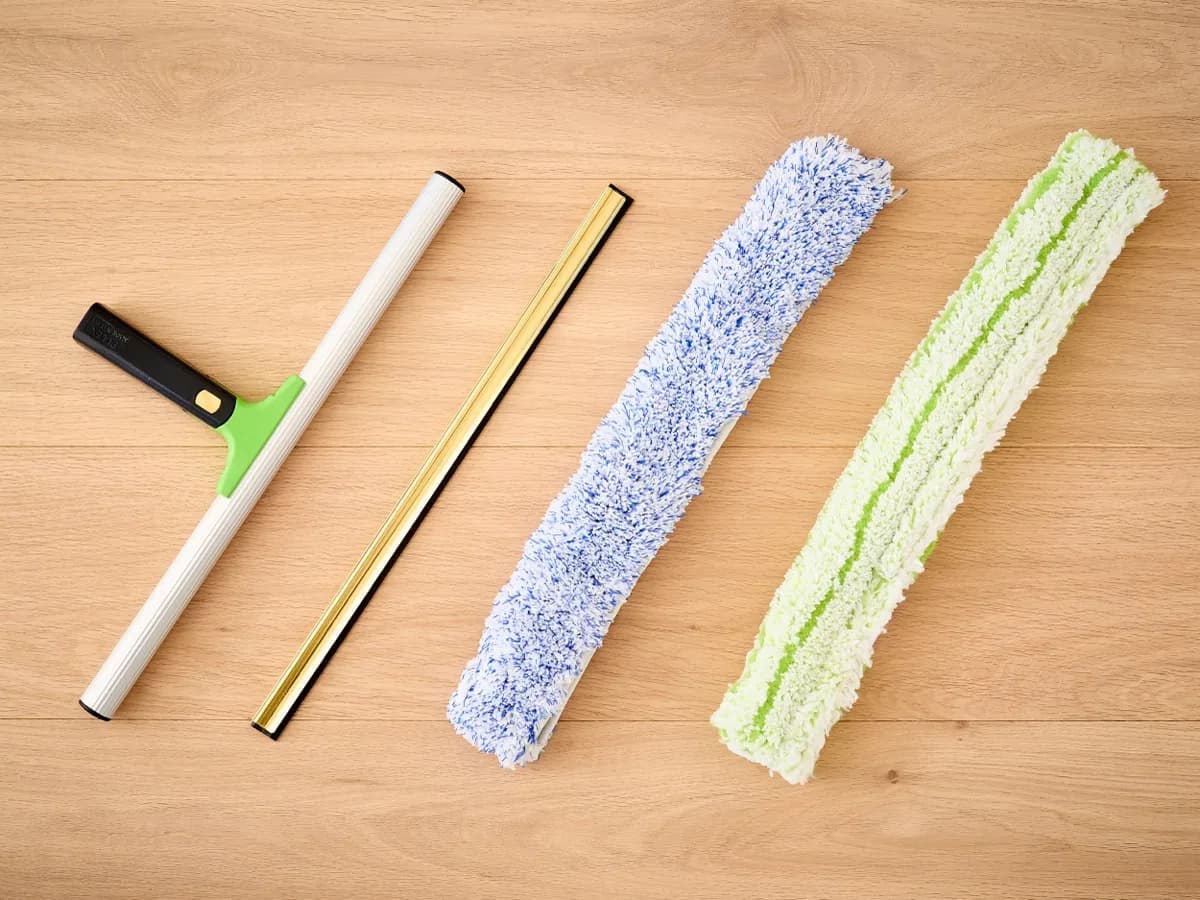
- 1Microfiber T-bar applicator, kept clean and rinsed regularly to prevent grit
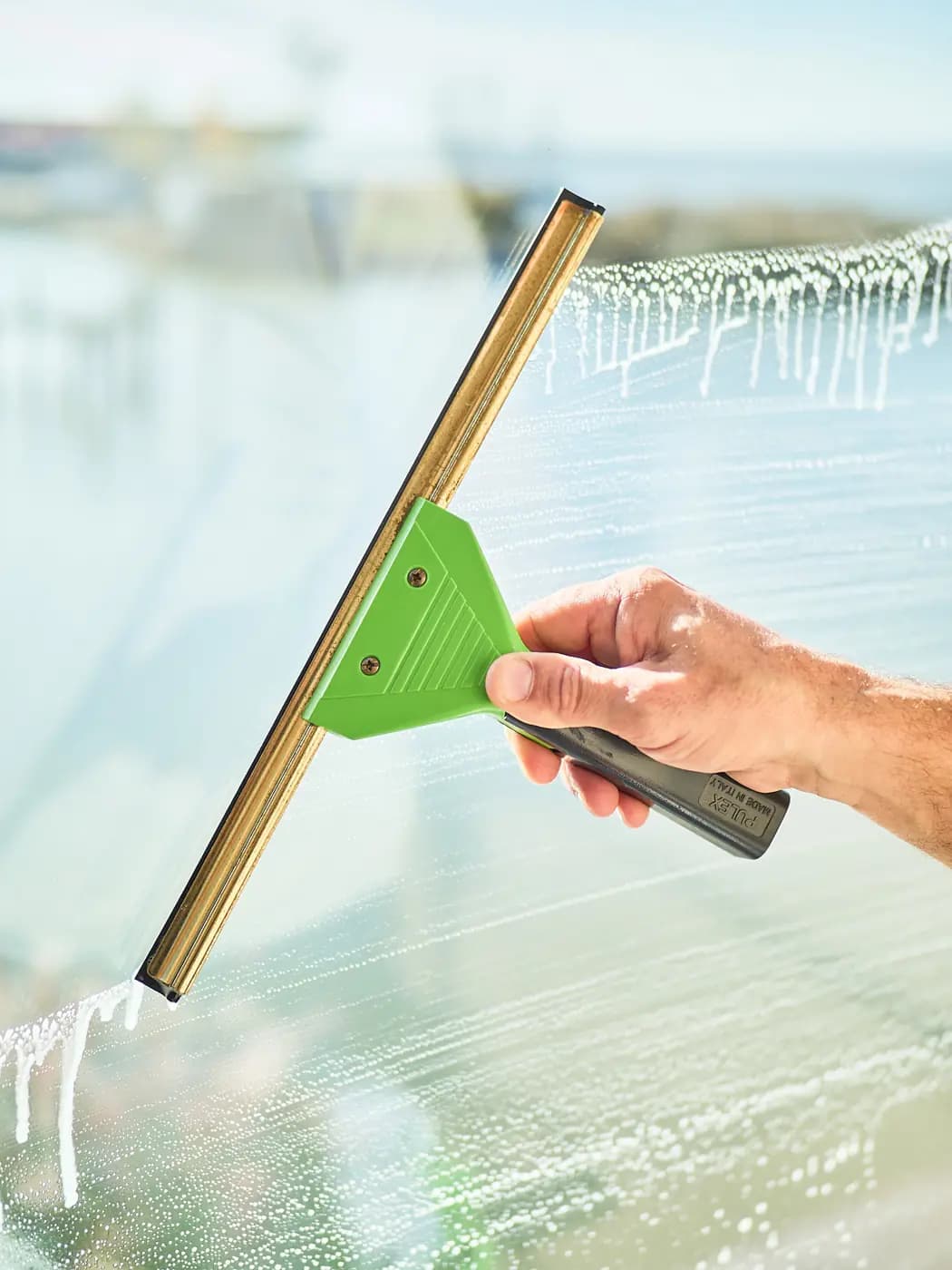
- 2Professional squeegee with a fresh rubber blade
- 3Extension pole for glass above arm height
- 4Bucket with at least 10 litres of water and enough soap for cleaning power without excess foam
- 5100% cotton towelling rags for edge detailing
- 6Vacuum for sill tracks and base profiles
Preparation: before any water touches the glass
Fill the bucket with at least 10 litres of water. Add soap for cleaning power: enough to cut through environmental deposits, not so much you are fighting foam.
Before touching the glass, brush down the surface to remove loose dust, spiderwebs, and debris. Any grit left on the glass during the wash phase risks scratching during agitation.
Check the aluminium frame condition before you start. Confirm which cleaning product is safe for that surface before opening any bottle.
Cover anything below the windows that cannot be moved.
Agitation: apply and work the solution
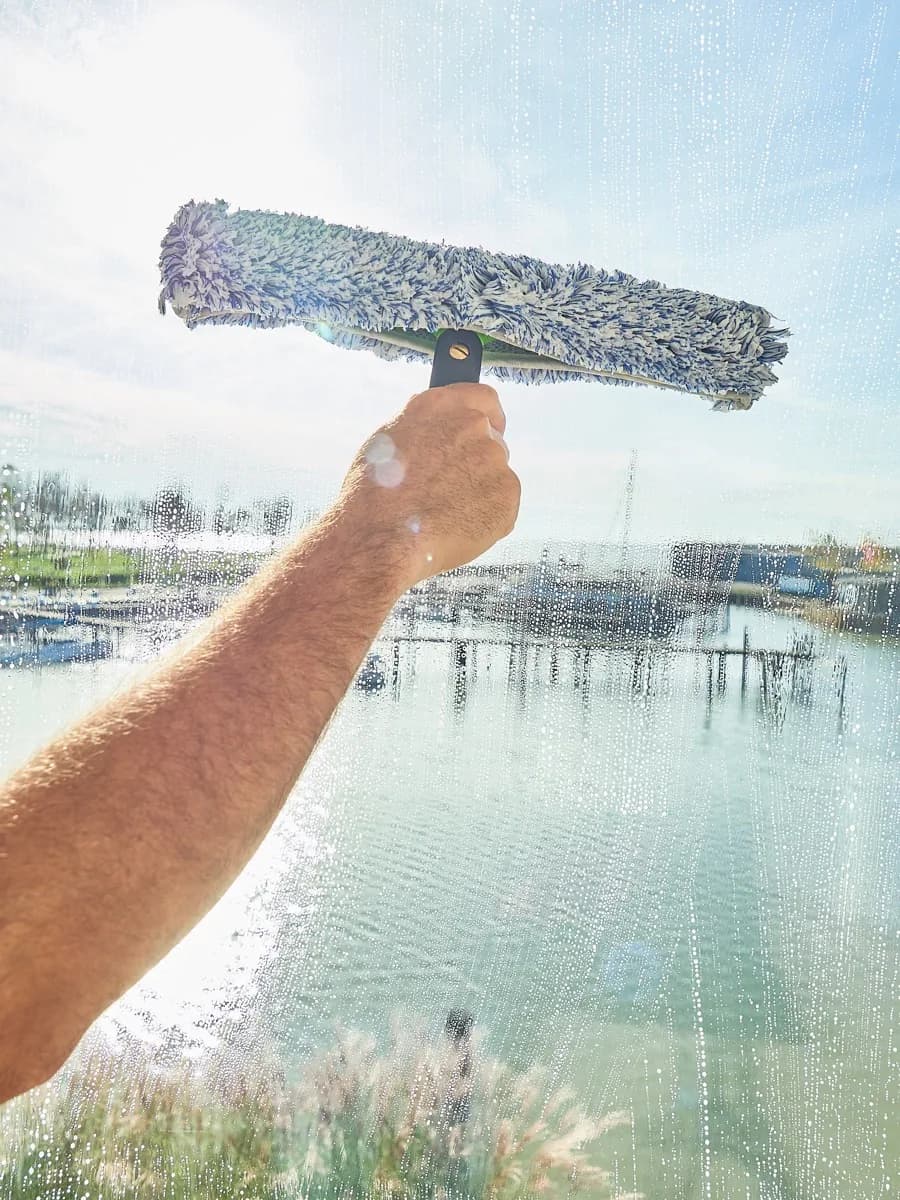
Dip the microfiber T-bar completely into the soap water, both sides. Remove excess water with your hand so it does not drip. Apply the solution across the entire glass surface with overlapping passes.
The goal is to fully dissolve and release every deposit from the glass surface. Anything not released during agitation gets transported across the glass by the squeegee as a smear.
For stubborn spots (insect marks, salt residue, environmental deposits), re-apply soap water and allow it to soak for a full minute before agitating again. Use more soap water, not more pressure.
For panels above arm reach: attach the T-bar to an extension pole. Work in sections (top first, then middle, then bottom), keeping each section wet until you squeegee it.
Rinse the T-bar cover regularly during the job. A dirty applicator causes microscopic scratches that accumulate over time.
Detail the frame edge before squeegeeing
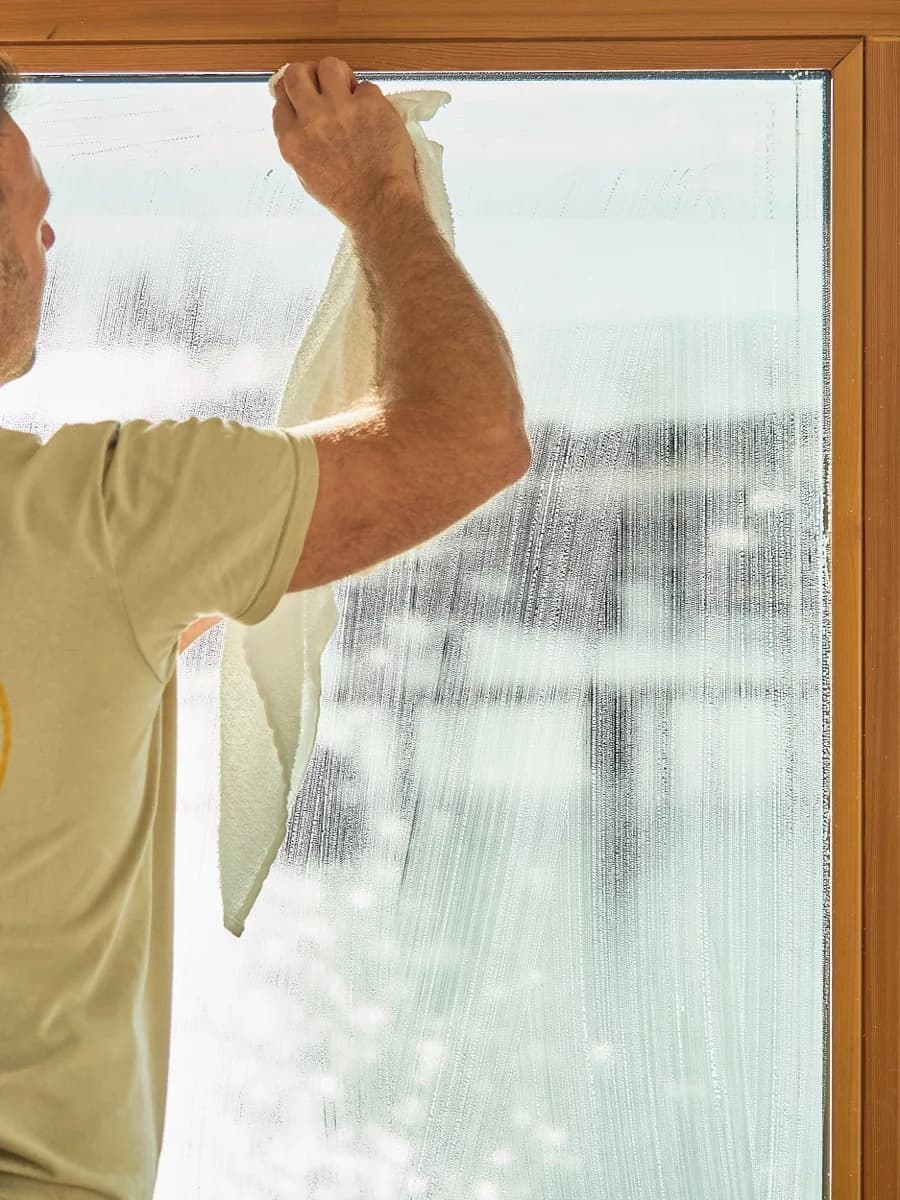
Use your 100% cotton towelling rag, finger pressed into the fabric, to work into every junction and remove pooled soap water before the squeegee pass.
This prevents drips running down onto already-cleaned areas during squeegeeing and keeps soap water out of drainage channels.
On Prime Asia aluminium frames, pay particular attention to the bottom edge where glass meets the frame sill: water pooled here runs into drainage openings and leaves residue over time.
The squeegee
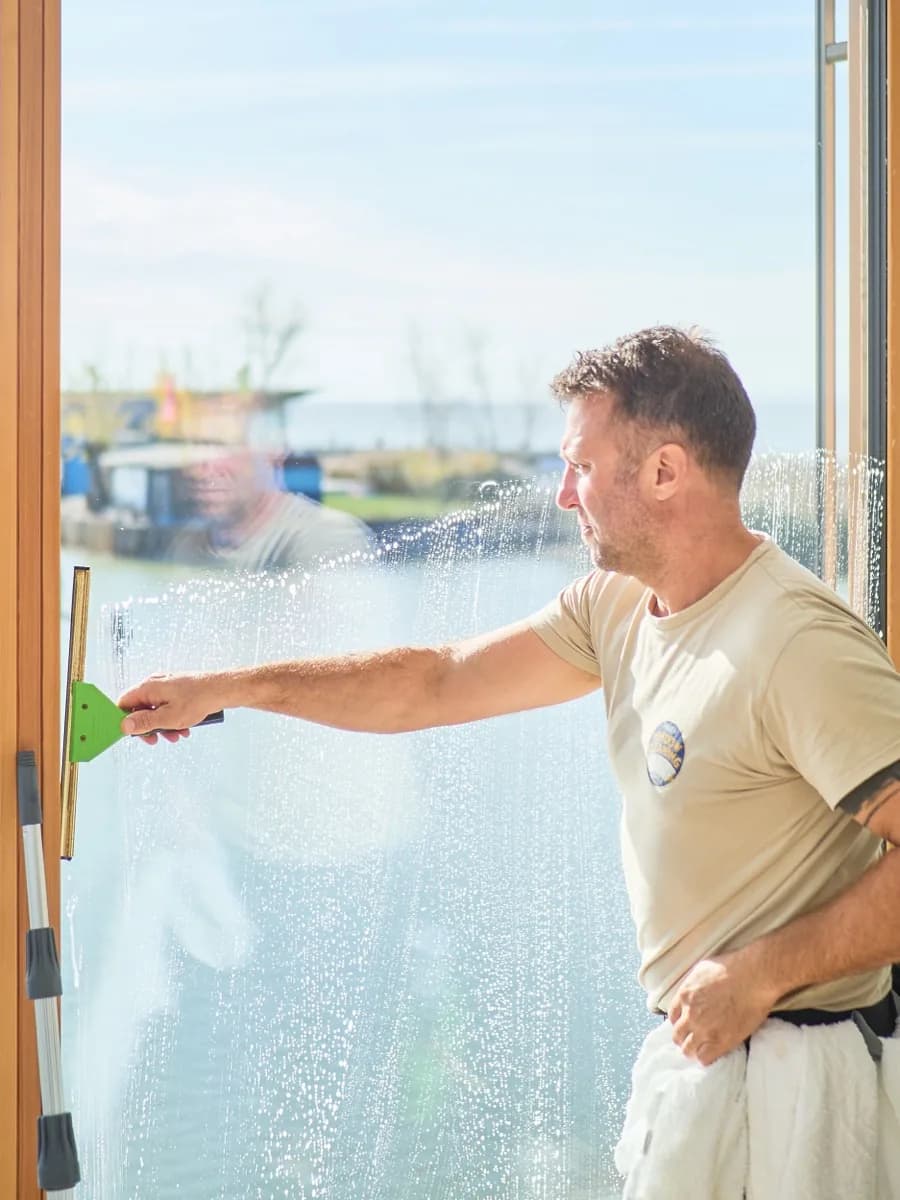
Tilt the squeegee at a slight angle so soap water spills from one side of the channel only, not both. If the rubber is jumping or squeaking, either the rubber is not lubricated enough or the glass surface has warmed.
Cutting in: start with the rubber blade making first contact on a dry edge of the glass.
Side to side: horizontal passes across the panel. Works well on wide sections. Top to bottom: vertical passes down the panel. Works well on tall narrow sections.
The J turn: one smooth unbroken motion top to bottom, wrist rotating at each end to reverse without lifting the rubber. The most efficient method on larger panels, but it requires training before applying it to premium glass.
Wipe the rubber dry after every pass. Overlap each stroke by 2-3 cm.
Final edge detailing
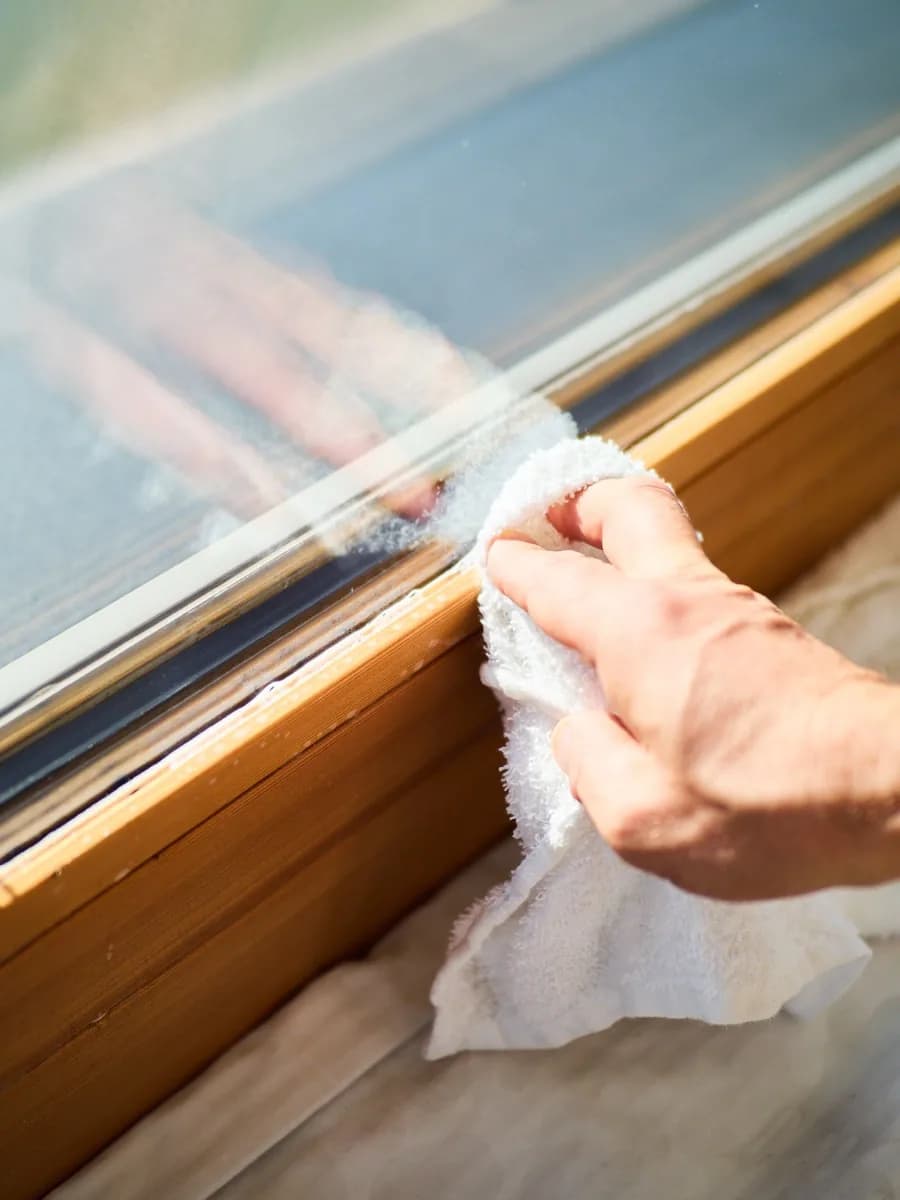
After squeegeeing, there is always a residual line of water along the bottom edge and at the panel sides. Take a dry cotton rag, fold to a clean corner, and detail these edges in one smooth pass.
On Prime Asia frames, the bottom edge where glass meets the sill requires the most careful attention. Water left here runs into drainage and leaves residue that affects the next clean.
Rotate the rag to a clean section after every pass. If the rag picks up grit at any point, replace it immediately.
Frame wipe and hardware check
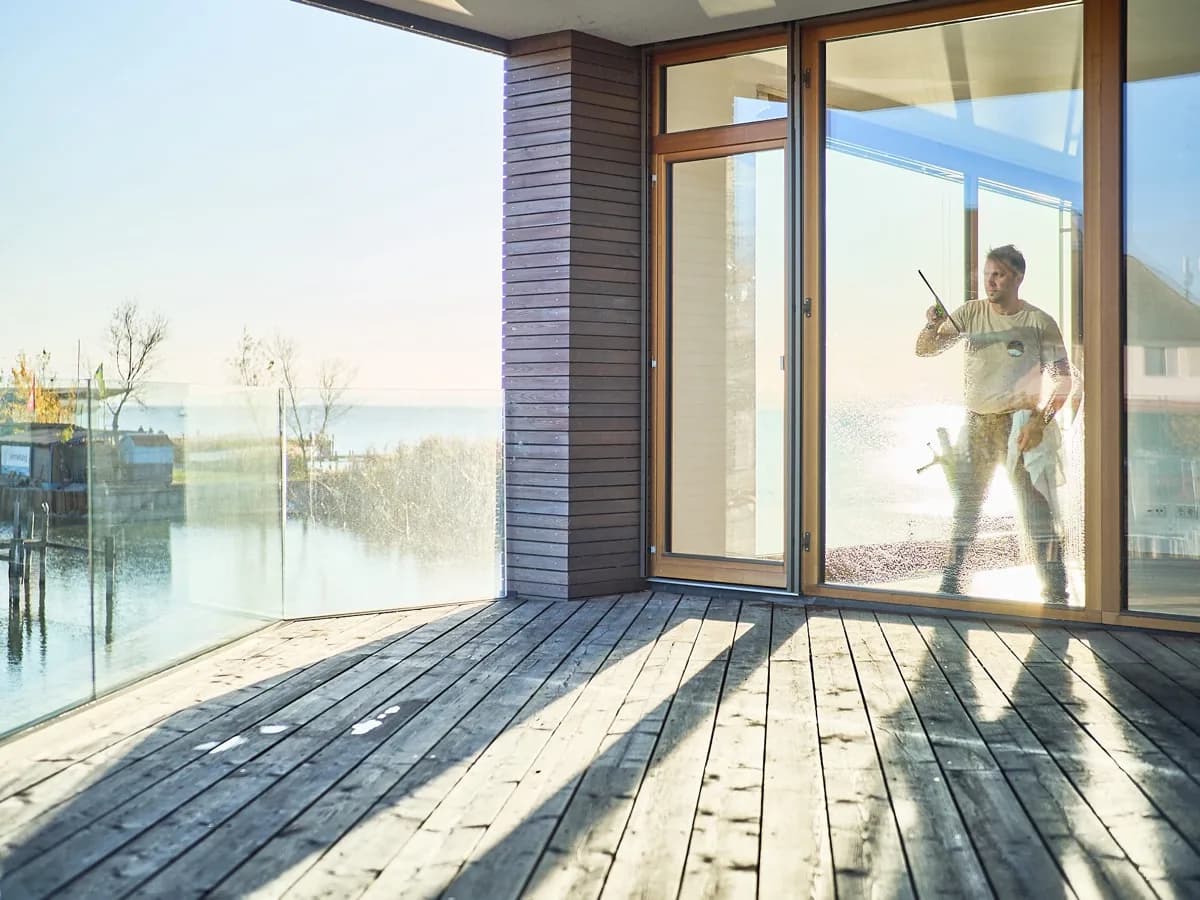
On Prime Asia powder-coated aluminium frames: use pH-neutral cleaner only, never abrasive pads or steel wool. Dry immediately after wiping.
Check that all drainage openings are clear and unobstructed. Water must be able to flow freely: a blocked channel leads to accumulation that affects seal performance over time.
Operate every opening window through its full range. Stiff handles or resistance at locking points indicate hardware that needs lubrication. Flag it to the owner rather than forcing it.
Pro Tips
- In Thailand dry season, budget at least 20% extra time per property for the extended pre-rinse step - it prevents re-work from dust grinding
What NOT To Do
- Do not agitate dry-season dust onto glass without pre-rinsing first
- Do not use solvent or alkaline products on uPVC
- Do not skip weep hole clearing during Thai wet season
Bundle Kit
Pro Kit
The full professional setup. Brass squeegees, T-bar with applicator cover, tool belt, rags, soap, and bucket. Everything from the daily tool list in one box.
Cleaning Frequency
- Wet season
- Every 6 weeksOrganic matter and drainage management priority
- Dry season
- Every 8 weeksDust accumulation slower - but pre-rinse is critical
Frequently Asked Questions
How often should I clean Prime Asia Associates windows?
For Prime Asia Associates windows, Wet season: Every 6 weeks (Organic matter and drainage management priority). Dry season: Every 8 weeks (Dust accumulation slower - but pre-rinse is critical). City locations may need more frequent cleaning.
What tools do I need for Prime Asia Associates windows?
Professional cleaning of Prime Asia Associates windows requires my daily tool list of: Microfiber T-bar applicator, kept clean and rinsed regularly to prevent grit, Professional squeegee with a fresh rubber blade, Extension pole for glass above arm height, Bucket with at least 10 litres of water and enough soap for cleaning power without excess foam, 100% cotton towelling rags for edge detailing, Vacuum for sill tracks and base profiles.
What should I avoid on Prime Asia Associates windows?
Do not agitate dry-season dust onto glass without pre-rinsing first
Does Prime Asia Associates publish an official cleaning guide?
Yes, Prime Asia Associates publishes official care guidance. Source: ORLOFFS PROFESSIONAL GUIDANCE - TROPICAL ALUMINIUM AND UPVC PROTOCOL
Can I use a water-fed pole on Prime Asia Associates windows?
In my experience, yes: purified water via a water-fed pole is one of the safest methods for Prime Asia Associates glass. Ensure TDS is at or near zero before use and avoid directing high-pressure water at seals or gaskets.
Field Notes
“Thai residential cleaning rounds in expat areas follow European expectations on cleaning standards but require tropical scheduling. Aligning client expectations on 6-8 week frequency is important from the first conversation.”
What's next for you?
The Skill
New to window cleaning?
Start with the core techniques before tackling premium systems.
Start The Skill, $69The Standard
Upskill your team
Covers every system, product type, and tricky scenario.
Train your team, $199 per personDo you make windows, doors or glazing?
The brands here are not partners. We wrote these care guides ourselves, so your customers know how to look after your windows. Want your own?
Become a Brand PartnerBrand logos provided by Logo.dev