learn · article12 Nov 20264 min read
Low Startup Cost Business: Window Cleaning, Line by Line
A low startup cost business, line by line: my first window cleaning kit since 1999, what was a waste, the costs that are not tools, and when it paid for itself.
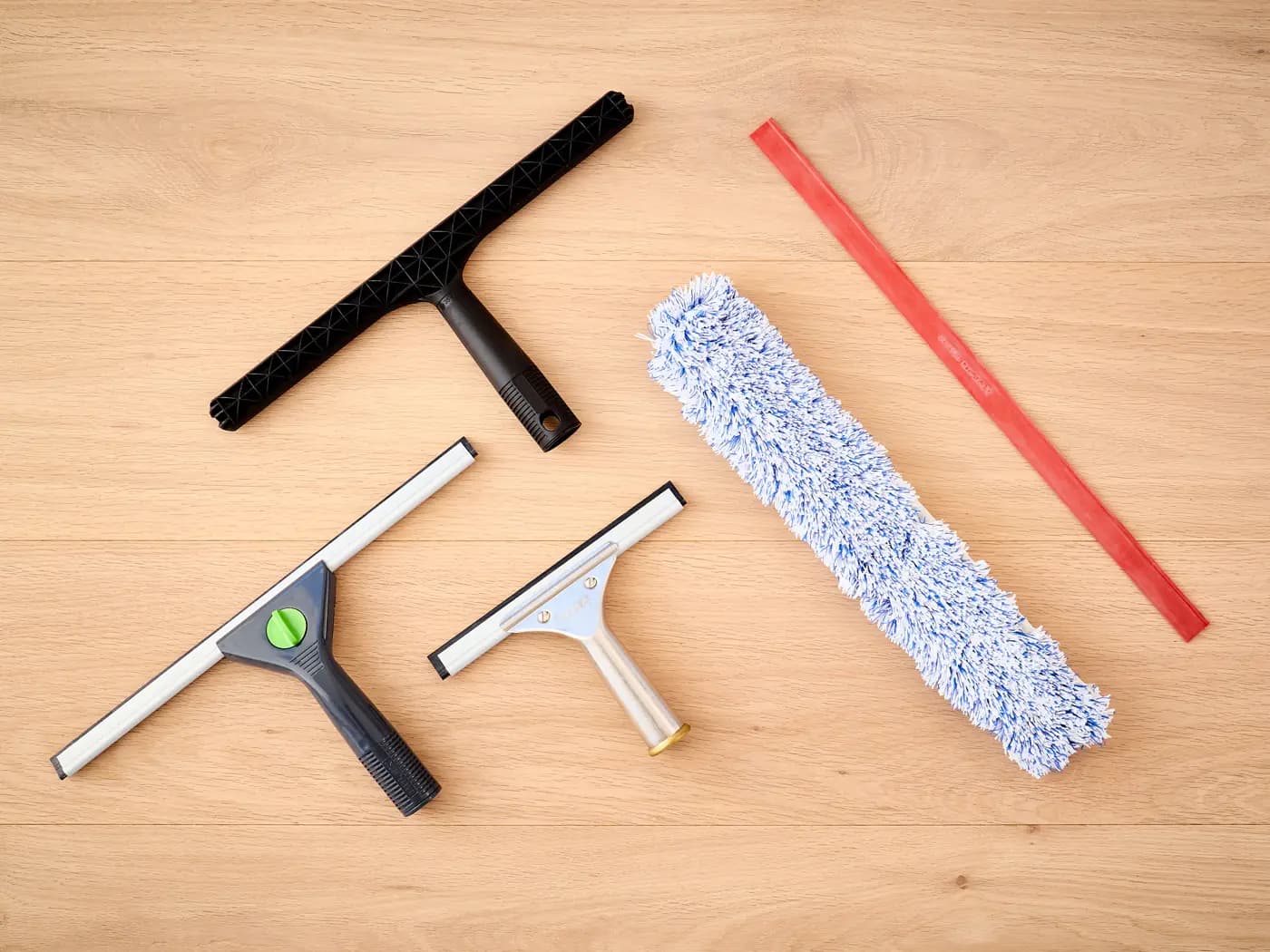
If you are looking for a low startup cost business, window cleaning is the one I know. My first kit is more or less the same tools I use today, since 1999. Here it is line by line, with what was a waste, the costs that are not tools and when it paid for itself.
TL;DR
- My first kit was a handful of tools: squeegees, a T-bar applicator, a tool belt, rags, a pole, a bucket and some soap.
- The waste comes from chasing every new tool. Mine came as a set from my contractor, and I have hardly changed it.
- The real costs after that are insurance, transport, your phone and flyers. Keep them simple and save in the good months.
- Before the end of my first year as a full-time subcontractor, the work was paying for a mortgage.
My first kit, line by line
- A brass squeegee, about 20 centimeters long
- A swivel squeegee with a quick release channel, about 30 to 35 centimeters, for some extra reach
- A swivel T-bar applicator with microfibre cover
- A tool belt with rag loops, and a holster to carry your tools
- Rags for the detailing, which also go on the belt
- A pole
- A bucket and some soap
That is pretty much the tool list. For today's prices, read what it costs to start a window cleaning business, where I go through it item by item.
What was a waste
There are always new variations of the squeegee coming out. Some are interesting, and some have good marketing. On some of them the channels are not so good, but the handles are very good, with adjustments and angles for certain windows.
Some squeegees are better than others. Overhead, the Moorman zero degree is good for drip-free work, and the Wagtail is a good one. Over time you test, try and work out your own perfect toolkit.
My contractor gave me a set, and it was the perfect one to start with. So I have not really varied from it.
The first month's real costs that are not tools
You might earn quite good money early on. My advice is to budget and save. Do not spend it because you made five or ten times what you normally would. Be realistic and be humble.
There is an off season. You can get sick, the weather can turn, customers can drop off and competitors can undercut you. When it is good, it is good. Save in those times, so the unforeseen things are covered: tool replacement, transport, insurance, your phone and flyers.
You do not need to be elaborate:
- Insurance and transport you need, of course.
- Your phone: you have to be contactable.
- Flyers are not strictly needed, but they create new customers. Start in black and white on your own printer at home. As the months and years go on, move to a professional printer with photo quality.
It is small steps. You need to make an impression with your quality of work. Turn up clean, well presented and punctual, insured and contactable. You do not need the latest and greatest.
When the business paid for itself
Before the end of my first year as a full-time subcontractor. I was 27 or 28, paying off a mortgage on a house, and the window cleaning was more than enough. I was able to buy a new car, invest in other things and go on snowboarding trips.
How did I know? When my savings became big.
Where to start
You do not have to buy anything to find out if this is for you. Start free with the First Week, and learn which 5 tools you need, for $35 to $60.
Related guides
- What it costs to start a window cleaning business
- Your first 30 days in a window cleaning business
- How to start a window cleaning business
- Business in a box: what is actually in the box
Questions people ask
Finding this useful?
What is a good low startup cost business?
Window cleaning is the one I know. The 5 beginner tools cost $35 to $60, and I still use more or less the same tools I started with in 1999.
What tools do you need to start window cleaning?
My first kit was a brass squeegee, a swivel squeegee, a T-bar applicator with microfibre cover, a tool belt and holster, rags, a pole, a bucket and some soap.
What costs should I plan for besides tools?
Insurance, transport, your phone and flyers. Budget and save in the good months, because there is an off season and unforeseen things happen.
How long does it take a window cleaning business to pay for itself?
For me, it was before the end of my first year as a full-time subcontractor. Yours depends on your customers and your costs.

About the author
Justin Orloff
Justin Orloff is a professional window cleaner since 1999, based in Vienna, Austria. He created the world's first AR-powered window cleaning training program at orloffs.com.
Cleaning Since 1999, Digitally Made Accessible: My industry insights are 100% human-driven. Because I live with dyslexia, I use AI tools to ensure my master experience since 1999 is polished and readable. To my Editorial Policy
Was this article written by AI?
Yes. AI helps me polish and format my writing because I'm dyslexic. The experience, techniques, and opinions are entirely my own. Full details in my Editorial Policy.
Want this in your hands? Start with The Skill.